

MLCCs support snubber and smoothing in motor-control power stages
From inverter dc links to snubber networks, Murata Electronics Europe B.V. offers GRM series multilayer ceramic capacitors (MLCCs) for industrial drives, and the GCM series MLCCs for automotive powertrain and safety systems.
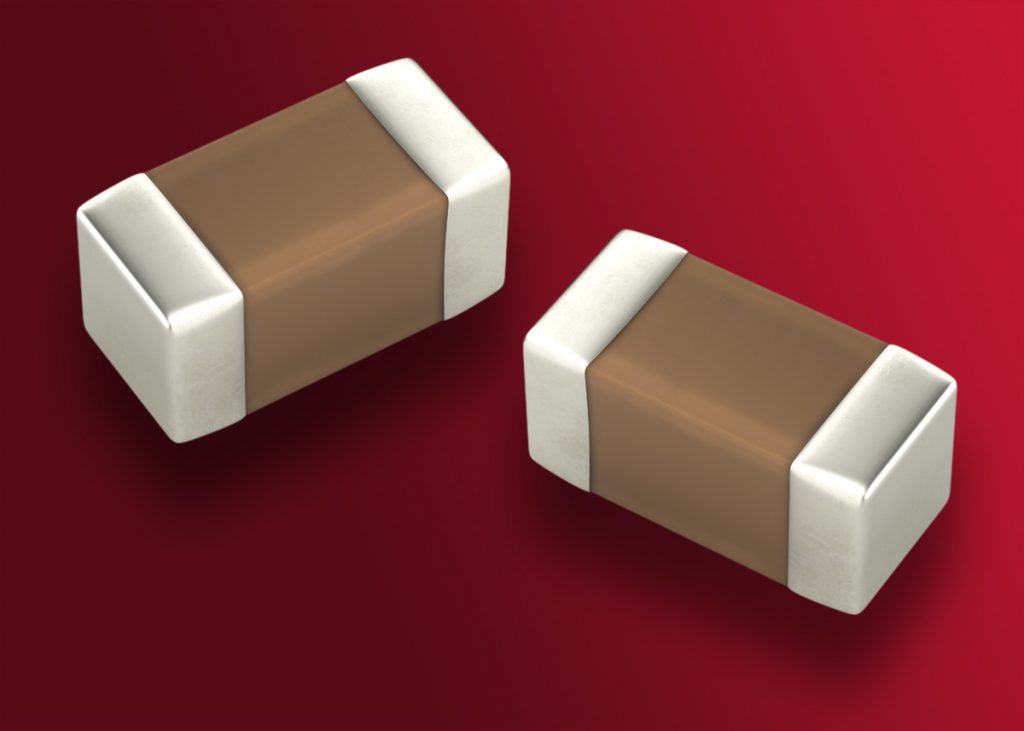
Capacitor choice in motor and motion-control hardware is no longer only about capacitance value. In Murata reference material for industrial motor drives, the GRM series appears in the inverter or servo power stage for Class 2 smoothing and for snubber or resonance positions, where the capacitor has to cope with high switching stress around the power semiconductors.
The GRM series covers snubber and resonance duties with voltage ratings from 630V up to 1,250V dc and U2J or C0G dielectric characteristics. The broader line-up spans capacitance from 0.1pF to 330μF across a voltage range from 2.5V dc to 3,150V dc.
That makes the GRM series particularly relevant in industrial inverter and servo designs using insulated-gate bipolar transistor (IGBT), silicon carbide, or gallium nitride switches. These MLCCs can be used in ac or dc conversion stages, inverter sections, and controller supply rails, where low loss, stable capacitance, and compact size matter in factory automation, robotics, and mechatronics equipment.
For automotive motion-control designs, the GCM series serves as the more rugged MLCC. The GCM MLCCs are designed for automotive powertrain and safety equipment, with AEC-Q200 compliance and line-up options that support operation up to 150°C. These MLCCs are qualified to significantly more demanding test conditions than the GRM series, with humidity loading at 85°C for 1,000 hours versus 40°C for 500 hours, and 1,000 temperature cycles versus five. This is why the GCM family fits under-bonnet and safety-relevant control hardware more naturally.
The practical value of specifying both series is clear. GRM gives industrial motor-drive designers a broad ceramic capacitor platform for smoothing, snubber, and control-board decoupling, while GCM gives automotive engineers a line built for harsher environmental, and qualification demands in powertrain and safety electronics.