

IMUs as navigation copilots enable precision in automotive and industrial systems
It takes more than one picture from a camera, one sweep from a LiDAR or one signal from a radar to get the location right. An inertial measurement unit (IMU) is important because it gives us information about how something is moving all the time.
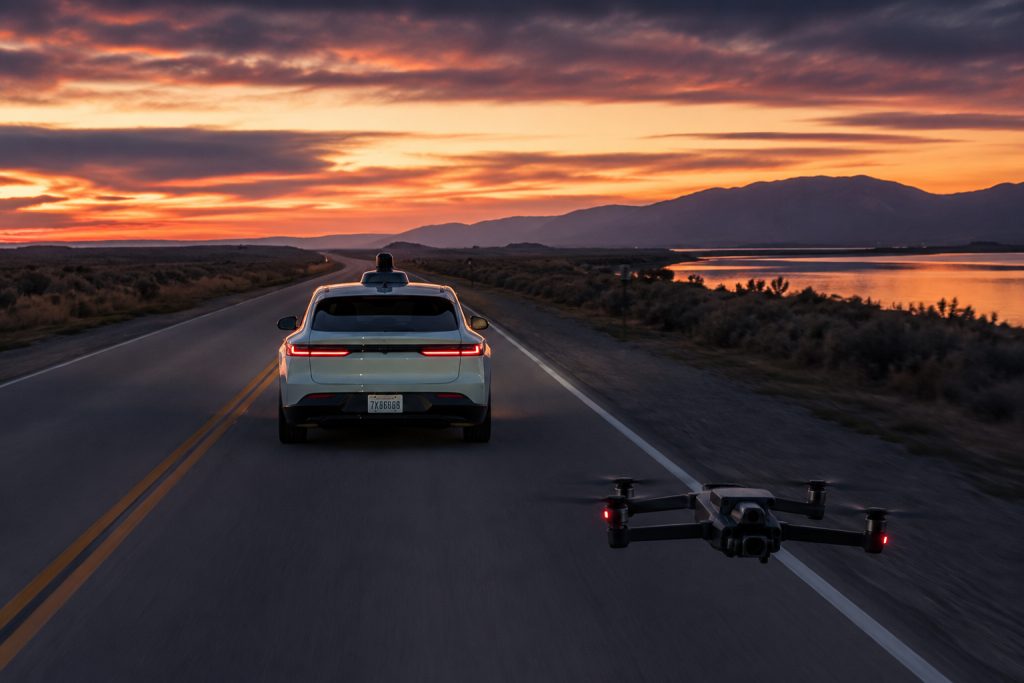
This gives the control system some knowledge of what is going on between the instances that external information is received from a camera, LiDAR or radar. So, an IMU helps to determine the position of drones, autonomous mobile robots, self-driving cars, and other systems that move.
The helping role of the IMU becomes more vital when the environment is not good. For example, when it is foggy, dusty, dark or there are tunnels or tall buildings, it may be difficult to obtain information from cameras or satellites. That is because the IMU is not reliant on light or satellites and hence it can come in handy when the position of an object is uncertain, or the incoming data from the camera, LiDAR or radar is insufficient. For this purpose, there are algorithms that are supported by the IMU, that help to keep track of the position of drones, robots, self-driving cars and other things that can move.
Selecting the right IMU
For engineers who pair an IMU with radar or LiDAR, the main design considerations are simple:
- Gyroscope bias stability, because lower drift improves orientation accuracy over time
- Accelerometer noise and bias stability, because both directly affect dead reckoning
- Sampling rate, with 1kHz or higher, is often preferred in fast-moving systems
- Noise density, because cleaner motion data reduces fusion errors
- Temperature compensation and scale-factor accuracy, because calibration quality matters when multiple sensors must agree
One architecture, different priorities
The same principle of sensing is used for very different markets, but the target of optimization changes.
When talking about consumer applications, size, power consumption, and cost become critical factors. For example, the LSM6DSV from STMicroelectronics uses low-power 6-axis IMU architecture, sensor fusion, finite state machine (FSM) embedded into the chip so that designers do not need to create the topology themselves in code, and a triple channel design for user interface, optical image stabilization, and electronic image stabilization functions. This is why the LSM6DSV is an ideal choice when dealing with applications such as smartphones, wearable gadgets, and augmented reality/virtual reality gadgets that require low power and high-quality motion.
In terms of industrial applications, factors such as reliability and stability become more important. The ISM330DHCX is designed specifically to address Industry 4.0 needs, featuring high accuracy, stability, low noise levels, and full data synchronization. Apart from this, the ISM330DHCX is complemented by the ISM330IS. The ISM330IS has a built-in intelligent sensor processing unit (ISPU) that acts like a programmable core used to handle signal processing and artificial intelligence at the edge.
The specification of automotive platforms now requires attention to meet qualification and functional safety. ASM330LHB and ASM330LHBG1 come in handy when dealing with more stringent requirements for automotive applications. These IMUs help to address automotive specifications such as extended temperature range and safety software flow compliance. This becomes valuable for advanced driver assistance systems (ADAS) or vehicle controllers that have an increased demand for precision, safety support, and robust operation.
Calibration still matters
Even a strong IMU needs to be properly calibrated. A factory calibration is for correcting bias, scale-factor and alignment errors before shipment, while a field calibration is for adjusting the sensor to the final mechanical mounting and operating environment.
Accurate calibration can be achieved by standardizing the environment during measurement, including controlling temperature and avoiding vibration or magnetic disturbance.
After initial calibration, sensor fusion algorithms can then be used to enable real-time bias control, with corrective recalibration measures used to maintain accuracy, especially under long-life installations.
Where IMU technology is heading
The future direction of IMU technology is apparent within the STMicroelectronics portfolio. More IMUs now include machine learning cores that enable lightweight models to process and categorize sensor data locally for edge-based motion classification, and low-power design continues to push inertial sensing towards always-on use cases. At the same time, ongoing improvements in micro-electromechanical systems (MEMS) stability and temperature resilience help to realize improved long-term performance in industrial and automotive systems. Immediate improvements for current designs will come from sensor fusion, fewer power requirements, and reliable calibrated motion data.