

Integrated motor driver combines 35A output with built-in diagnostics
The STMicroelectronics STSPIN3P23 full bridge motor driver integrates power switches, current sensing, temperature warning, and fault reporting, helping engineers to simplify brushed dc motor and solenoid control in compact designs.
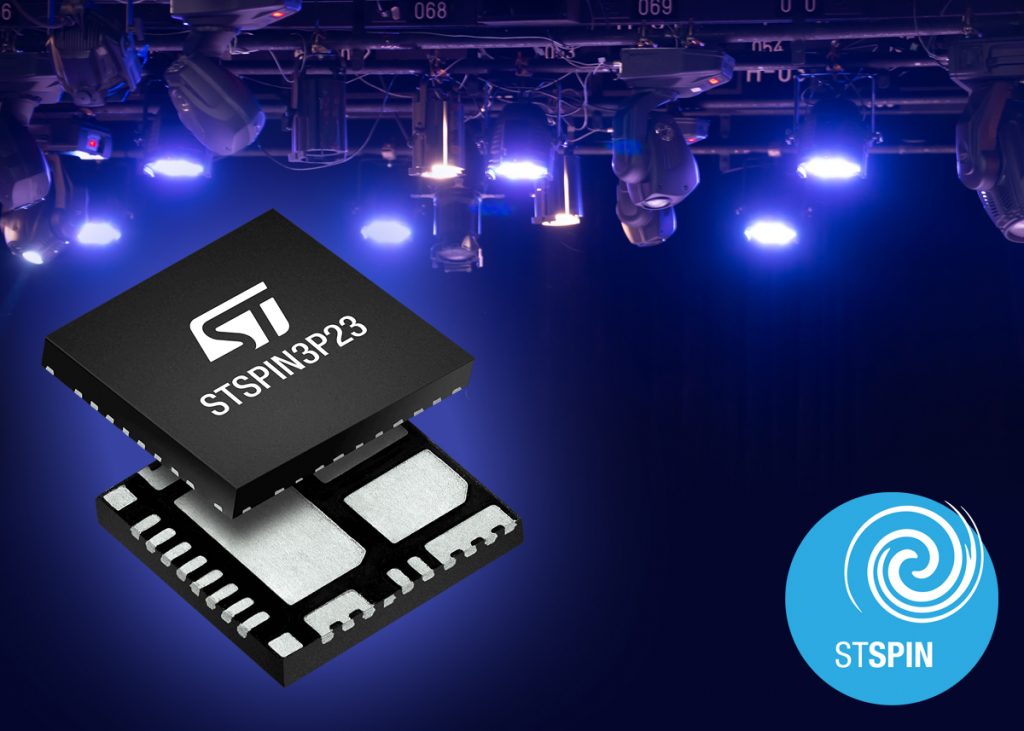
Board space and control circuitry both shrink because the STSPIN3P23 combines a dual high-side driver and two low-side switches in one fully integrated full bridge. That makes the motor driver well suited to low-voltage motion designs which need fewer external parts and a cleaner interface to a host controller.
Wide operating flexibility supports a broad spread of industrial loads. The motor driver runs from a 4V to 16V supply, tolerates up to 32V, accepts 3V CMOS logic inputs, and supports pulse-width modulation operation up to 25kHz for speed control and braking functions.
Efficiency receives particular attention in the STSPIN3P23. The output stage offers 30mΩ on-resistance per leg and a 35A current rating, with very low standby power consumption of 1µA at 25°C. That combination helps when designers need both compact thermal behavior and low quiescent drain in intermittently active equipment.
Monitoring and diagnostics form a strong differentiator. The multisense output provides analog motor current feedback, chip temperature monitoring, and fault reporting, selected through two control pins. A separate status output provides feedback on the driver output state, allowing the controller to verify whether the load is being actively driven or turned off. This supports safety-related functions and helps to confirm correct operation during normal running and fault monitoring.
Protection coverage matches the demands of motors, actuators, and solenoid loads in industrial equipment. The STSPIN3P23 includes diagnostics for output short to ground, output short to supply voltage, and off-state open-load conditions.
The package also supports dense layouts. ST assembles the STSPIN3P23 in a package with three exposed islands for improved heat dissipation, and provides PCB thermal guidance for both 2-layer and 6-layer implementations.