

Safety-grade MCU targets touch-driven industrial and appliance HMI designs
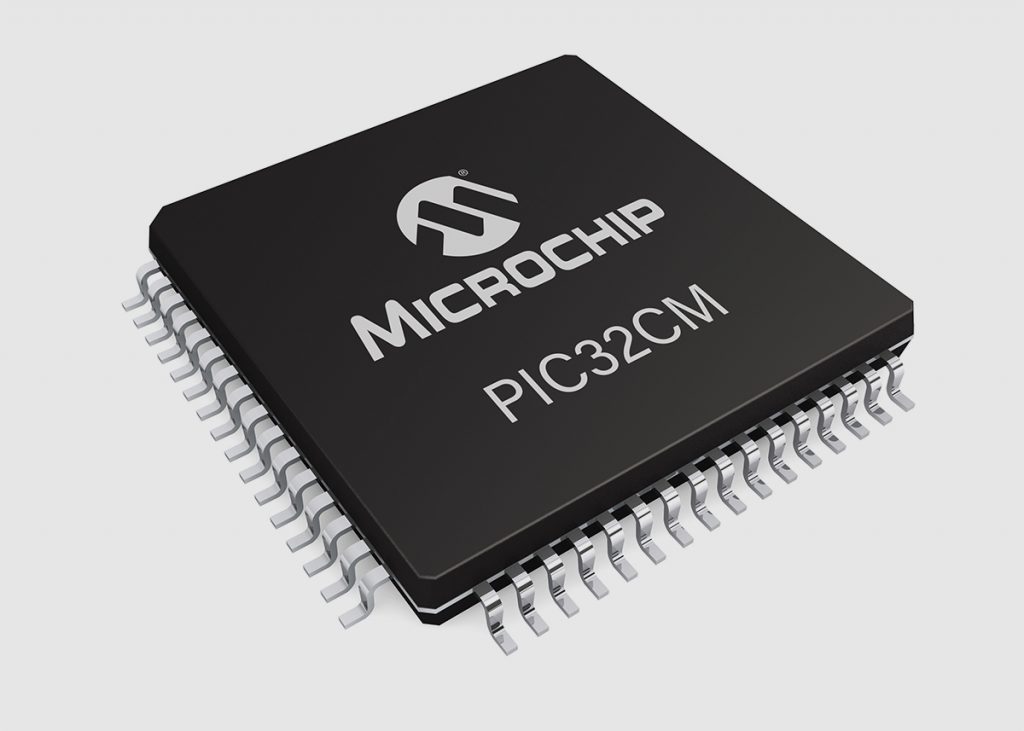
The Microchip PIC32CM5112GC00 combines functional safety hardware, an enhanced capacitive touch controller, and a broad industrial communications suite in a single Arm® Cortex®-M23 MCU for control panels, appliances, and light industrial nodes.
The central design challenge in touch-driven industrial equipment is maintaining reliable sensing in environments where noise, moisture, and electromagnetic interference are routine conditions. The PIC32CM5112GC00 addresses this through a dedicated peripheral touch controller (PTC) that supports up to 324 mutual-capacitance channels or 36 self-capacitance channels, with Driven Shield+ technology to improve noise immunity and maintain performance on wet surfaces. Wake-on-touch from standby sleep mode allows the sensing subsystem to remain active while the processor core is powered down, which keeps average current low in applications where the panel must remain responsive at all times without draining the supply.
The functional safety architecture is built to ISO 26262:2018, with error correction code (ECC) and fault injection capability on both the 512KB Flash and 128KB SRAM. The memory built-in self-test (MBIST) is accessible in user mode, and there is a fail-safe clock monitor with automatic safe-clock switching, and write protection of peripheral registers through the peripheral access controller. Together these features allow safety requirements to be addressed at the hardware level rather than relying on software workarounds, reducing the certification burden for the wider system.
Communications flexibility is provided by dual CAN-FD modules compliant with ISO 11898-1:2015, a full-speed USB 2.0 interface with on-chip transceiver, and six SERCOM interfaces each configurable as USART, I2C, SPI, RS-485, IrDA, or LIN host/client. This combination allows the MCU to connect simultaneously to a vehicle or industrial network, a local host processor, and lower-level sensors without external bridge components.
The analog front-end includes a 12-bit ADC running at up to 4.5Msample/s across up to 12 channels, supported by two analog comparators with programmable voltage references. SleepWalking allows peripherals including the ADC and event system to continue operating while the core sleeps, enabling autonomous data acquisition without software polling and reducing the frequency of processor wake events.