

Transceiver enables multi-drop connectivity with low-power microcontrollers
Combining a controller and physical layer, the T30HM1TS2500 Ethernet transceiver from onsemi allows standard microcontrollers to communicate via 10BASE-T1S Ethernet, reducing cabling complexity in automotive and industrial networks.
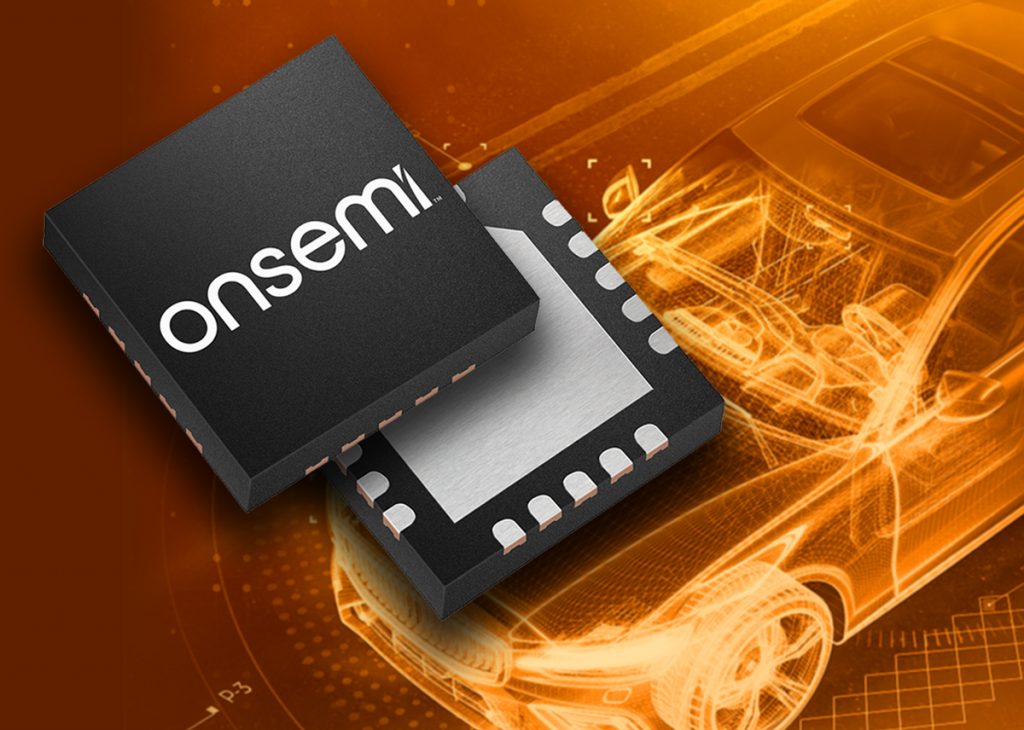
The T30HM1TS2500 is an IEEE 802.3cg-compliant Ethernet transceiver that addresses the need for seamless Ethernet connectivity at the network edge, replacing legacy fieldbus protocols with a unified architecture.
Manufactured on the onsemi Treo platform, the transceiver combines high-voltage analog capability with dense digital logic. This process technology provides higher performance in a smaller footprint, using less power.
The T30HM1TS2500 uses the 10BASE-T1S layer which enables multi-point communication over short ranges up to 25m, and a minimum of 8 nodes, allowing designers to eliminate heavy point-to-point wiring harnesses used in legacy networks. This reduction in cabling complexity contributes to simplified assembly in industrial and automotive applications. Meanwhile, the T30HM1TS2500 enhanced noise immunity (ENI) feature enables 10BASE-T1S segments of 40nodes/25 meters, 16 nodes/50 meters, or 6 nodes/60 meters.
By integrating the media access controller (MAC) directly with the physical layer (PHY), the transceiver removes the requirement for an Ethernet MAC within the host microcontroller, permitting the use of lower-cost MCUs.
Real-time control systems are dependent on reliable communication. The T30HM1TS2500 incorporates physical layer collision avoidance (PLCA) which optimizes bandwidth usage and guarantees deterministic latency. Data rates of up to 10Mbits/s over the shared bus are supported, offering a robust and high-speed alternative to legacy CAN, CAN FD, or LIN protocols.
The transceiver is equipped with advanced diagnostic features such as harness defect detection (HDD) and a signal quality index (SQI), allowing the system to identify cabling faults and monitor link health proactively.