
STMicroelectronics

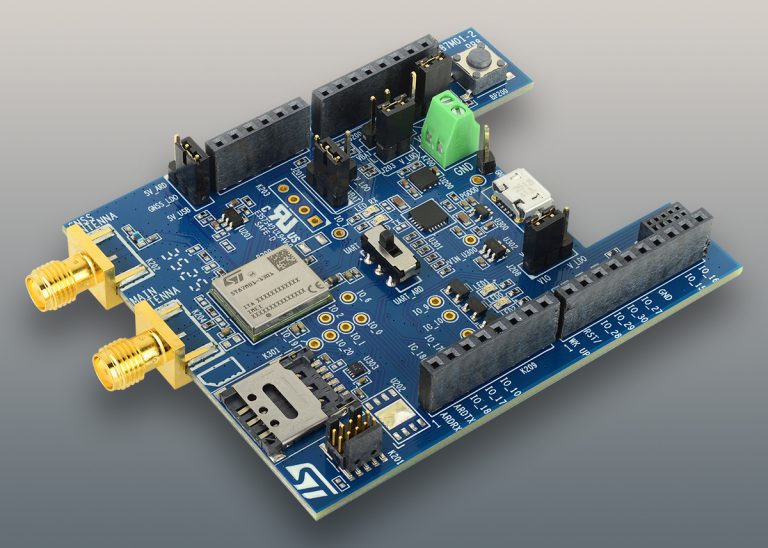
The B-WBA5M-WPAN STM32WBA connectivity expansion board from STMicroelectronics provides a flexible way to evaluate the STM32WBA5MMGH6 module.

The board includes a USB Type-C® connector for power only. It also integrates an M.2 E‑Key connector, turning it into an M.2 E‑Key daughterboard which provides a Bluetooth® interface to a host board that has an M.2 E‑Key host connector. The M.2 E‑Key connector is compatible with the PCI-SIG standard, and provides UART, SPI, I2C, and SAI interfaces for communication with the host.

The B-WBA5M-WPAN board is supported by the STM32CubeWBA software package. 


Key features include: 

  • 256 kbit serial EEPROM
  • Accurate MEMS temperature sensor
  • 3D accelerometer and 3D gyroscope
  • User LED
  • User and reset push buttons
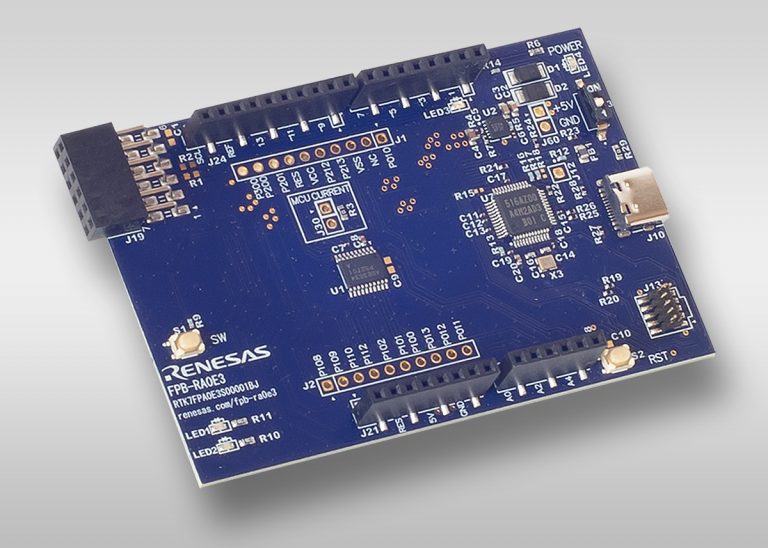
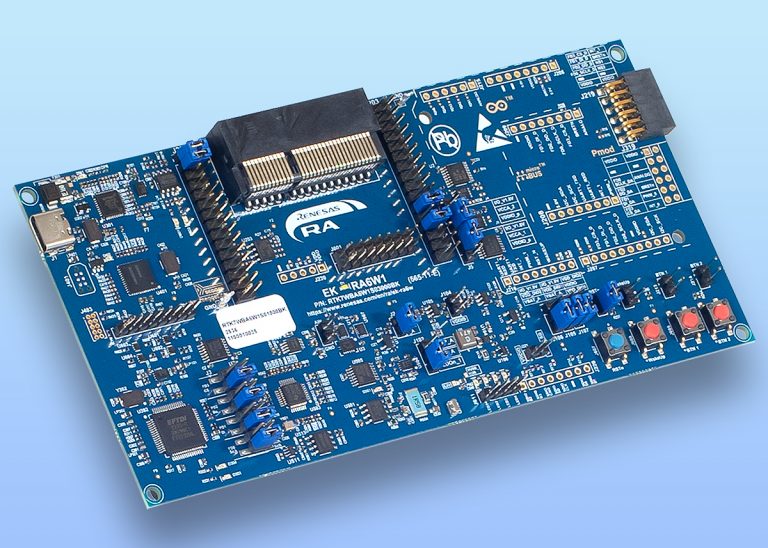
Renesas

The Bluetooth Low Energy Development Kit Pro for the DA14533 SmartBond TINY automotive system-on-chip (SoC) from Renesas includes a motherboard, daughterboard, and cables. It is the ideal platform for evaluating the performance of the small, low-power DA14533 in applications such as tire pressure monitoring and passive keyless entry. 

The kit provides users with the following capabilities:

  • Software development
  • Programming the DA14533 via JTAG or UART using the DA1453x software development kit supplied by Renesas
  • RF characterization
  • Hardware prototyping
  • Power measurement
  • 2 x auxiliary voltage/current measurement
  • Monitoring eight digital inputs 
  • Connecting MikroBUS™ modules
Infineon

This kit provides a development platform for the Sona™ IF513 module from Ezurio, which is based on the AIROC™ CYW55513 Wi-Fi 6/Bluetooth wireless chipset from Infineon. 

Key features: 

  • Antenna type: 2 x MHF4L connector for antenna diversity
  • Form factor: pluggable M.2 2230 E-Key 
  • Frequencies supported: 2.4 GHz/ 5 GHz /6 GHz
  • Wireless technologies: Wi-Fi 6E, Bluetooth 6.0


Infineon

The EVK-MAYA-W381 from u-blox provides a ready-made application environment for designers working with the MAYA-W381, a module which is based on the CYW55513 Wi-Fi 6/Bluetooth wireless chipset from Infineon. The module provides two external antennas for tri-band Wi-Fi 6/6E and Bluetooth 6.0 connectivity. 


Key features of the EVK-MAYA-W381 include:  

  • SD card adapters to access the SDIO host interface
  • USB interface to easily access the Bluetooth UART interface via a USB-to-UART bridge
  • Digital and analog audio interfaces for Bluetooth wireless networks 
  • SMA connectors for external antennas
  • GPIO pins and other module interfaces accessible through pin headers
  • Multiple power-supply options
STMicroelectronics

The NUCLEO-WB09KE board from STMicroelectronics demonstrates the performance of the STM32WB09, a Bluetooth® Low Energy wireless microcontroller which embeds a powerful and ultra-low-power radio compliant with the Bluetooth® Low Energy SIG specification v5.4.

ARDUINO Uno V3 connectivity support and ST morpho headers allow the easy expansion of the functionality of the STM32 Nucleo open development platform with a wide choice of specialized shields.

Key features include: 

  • Ultra-low power wireless STM32WB09KE microcontroller based on the Arm® Cortex®‑M0+ core, featuring 512 kbytes of Flash memory and 64 kbytes of SRAM 
  • MB2032 MCU RF board with built‑in PCB antenna
  • Three user LEDs
  • One reset and three user push-buttons
  • Board connectors:
    • USB Type-C®
    • ARDUINO Uno V3 expansion connector
    • ST morpho headers for full access to all STM32 I/Os
  • Flexible power-supply options: USB or external source
  • STLINK-V3EC debugger/programmer with USB re-enumeration capability
  • Comprehensive free software libraries and examples available with the STM32CubeWB0 MCU package
Infineon

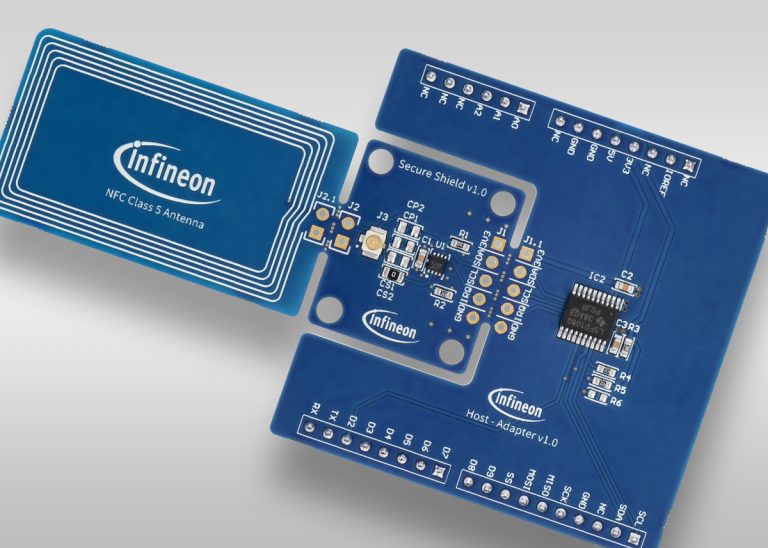
The OPTIGA Authenticate NBT development kit from Infineon is ideal for the quick and simple evaluation of the OPTIGA Authenticate NBT using example applications available through GitHub. These example applications include code for smartphones based on the Android or iOS operating systems.

The kit simplifies the development of custom applications using a PSOC host microcontroller based on the example applications. After detaching the adaptor board, the shield may also be used separately for evaluation and application development using other MCU boards.