
STMicroelectronics

The STEVAL-IFP028V1 evaluation board enables the IPS160H single high-side switch to be analyzed for systems compliant to SIL2 and SIL3.

The board meets application requirements for galvanic isolation between the user interface and the power interface through optical isolation implemented with two optocouplers, OPTO1 and OPT2, for forward signals to the device and for diagnostic feedback signals, respectively, in compliance with IEC 61000-4-2, IEC61000-4-4, IEC 61000-4-5 requirements.

The STEVAL-IFP028V1 can operate in the 8V to 60V range, but operation of the red LED on the DIAG pin is only ensured above 12V Vcc. Jumper J1 must be open for supply voltages above 40V to avoid permanent damage to the SMCJ40CA transient-voltage-suppression (TVS) diode.

The board optimizes thermal performance through a careful layout which includes a dedicated copper area connected to the exposed pad of the PSSO12 package, which also serves to dissipate heat.

Using your PC, you can monitor the status of the output on the power side and receive fault information from the IPS160H DIAG pin by connecting the STEVAL-PCC009V2 interface board between your PC via USB, and the STEVAL-IFP028V1 board via a 30-way flat cable. The STSW-IPS16X GUI software, is offered for free download.

STMicroelectronics

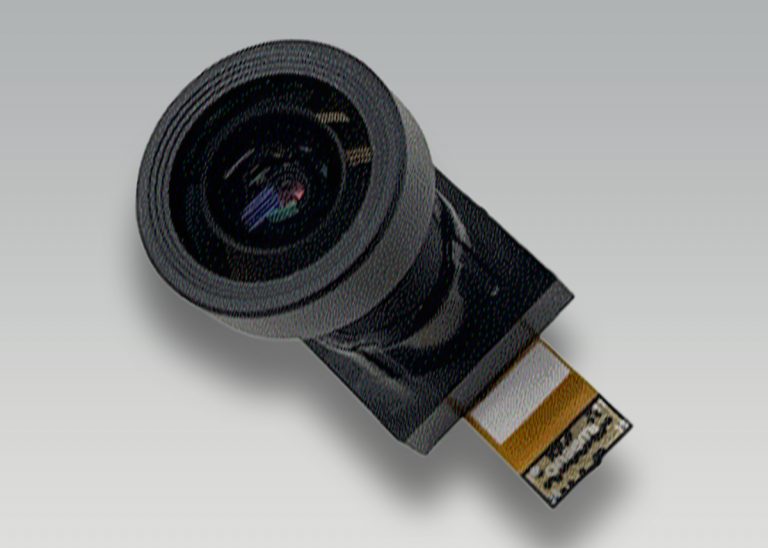
The STEVAL-VL53L9 evaluation board features flying wires on the header which simplifies integration of the board for the development and evaluation of the VL53L9CX dToF 3D LiDAR all-in-one module.

With MIPI and I3C interfaces, the STEVAL-VL53L9 board is compatible with platforms which include STM32 Discovery kits and Nucleo boards.

The VL53L9CX dToF offers high spatial resolution of 2.3k zones, with 71° diagonal FoV, and 1° angular resolution across a 55° x 42° FoV. Accurate ranging is enabled from below 5cm to 9m.

Microchip

The PIC32CM GC00 Curiosity Pro is a Microchip Technology development board featuring a 72MHz Arm® Cortex®-M23 microcontroller, requiring no additional hardware to get started.

The development board is designed to make it easy to prototype and evaluate applications based on the PIC32CM SG00/GC00 microcontroller family. The board comes ready to use out of the box, with an integrated MPLAB PICkit On-Board 4 debugger handling programming and real-time debugging over a single USB connection. Expansion options are plentiful, with Arduino UNO R3, mikroBUS, and Xplained Pro extension headers all present, making it straightforward to connect shields, click boards, and Microchip expansion boards. A solid set of onboard peripherals includes dual CAN transceivers, a precision voltage reference, touch and tactile buttons, user LEDs, and a potentiometer. This variety means there is plenty to work with before reaching for any expansion hardware at all.


Infineon

The CY8CPROTO-041TP is a plug-and-play prototyping kit for evaluating the PSoC™ 4100T Plus MCU and its fifth-generation CAPSENSE and Multi-Sense capabilities. The control board carries the MCU, an onboard KitProg3 programmer/debugger, and an ambient light sensor for ADC evaluation. Two peripheral boards provide access to a self-capacitive button, a mutual-capacitive button, a 4×5 capacitive touchpad supporting multi-touch, gesture recognition, and liquid tolerance, and a proximity sensor integrated as a loop antenna around the touchpad. With 52 GPIOs accessible via through-hole connections, compatibility with CY8CPROTO-040T-MS expansion boards for inductive and liquid level sensing, and full ModusToolbox software support, the kit covers the full range of Multi-Sense evaluation from a single platform.

STMicroelectronics

The STEVAL-MKI252KA evaluation kit is based on the IIS3DWBG1, ultrawide bandwidth, low-noise 3-axis digital vibration sensor with extended temperature range.

The evaluation kit includes a square sensing board with the IIS3DWBG1 mounted at the center, connected by flat cable to the STEVAL-MKIGIBV5 adapter board for compatibility with the STEVAL-MKI109D platform. The kit exposes the complete pinout and supports sensor configuration and communication through ST MEMS Studio.

Renesas

The RA0E3 Fast Prototyping Board features the RA0E3 MCU and provides a streamlined evaluation board for evaluating and developing prototypes across a wide range of applications. It includes a built‑in SEGGER J-Link™ emulator, enabling easy programming and debugging without requiring additional hardware.

Designed for flexibility, the board offers standard Arduino Uno and Pmod™ interfaces, plus through‑hole access to all MCU pins for expanded connectivity.

Sample software is available to help you quickly evaluate RA0E3 MCU functionality and integrate the board with wireless modules, sensor add‑ons, and other peripherals.